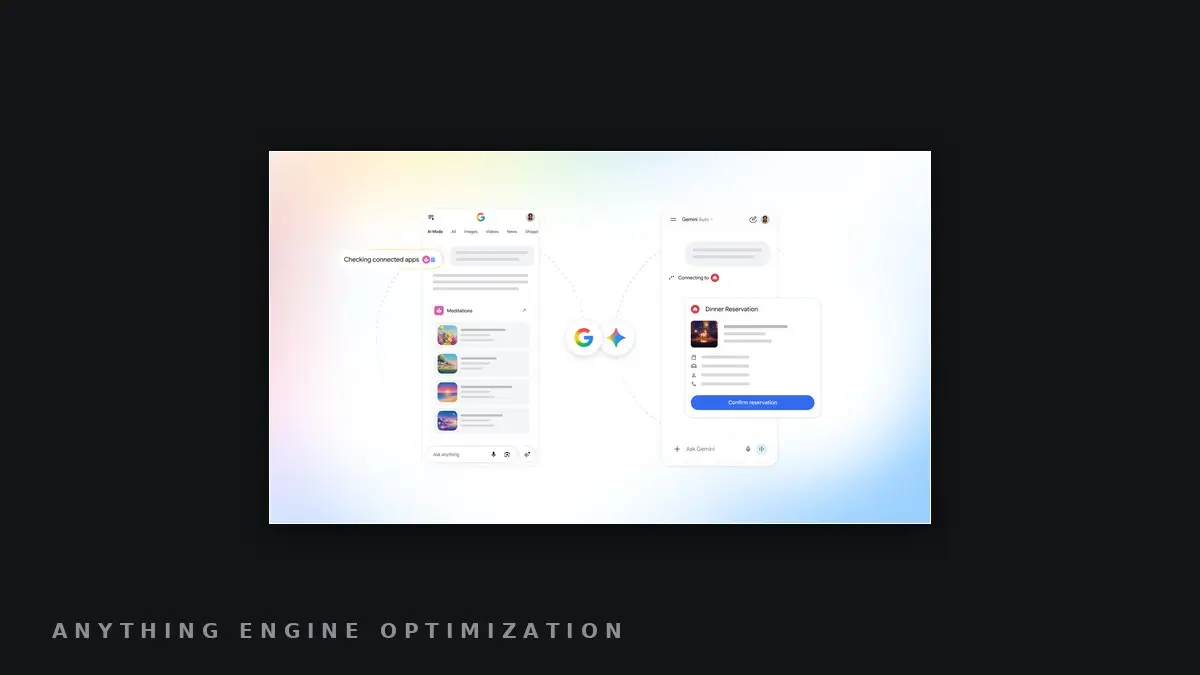
Google's Connected Apps policy bars deceptive descriptions to win AI Mode selection
What this answers
- Can an app game Google AI Mode by writing broad descriptions to get picked?
- No, per Google's Connected Apps Platform policy. It bars apps from using overly broad or deceptive capability descriptions to influence the model into selecting that app over another connected app.
- What happens if a Connected App breaks Google's policy?
- Google says it can reject the app at submission, suspend it, remove it from the platform, or suspend or terminate the developer's account.
Google’s Connected Apps Platform policy, which governs apps that run inside AI Mode and the Gemini app, says apps must not use “overly broad or deceptive capability descriptions” to push the model into choosing them over another connected app, per Search Engine Journal and the policy page. Apps also may not reference other tools or set rules for when other tools should be used, and may not serve third-party advertising. Google says violations can mean rejection at submission, suspension, removal, or termination of the developer’s account.
The policy page was last updated Sept. 28, before Google opened the public preview on Oct. 28, which the wire logged that day. That item noted the report did not say what Google requires to approve an app. The policy page does not describe how the model chooses between approved apps; Search Engine Journal, citing Google’s MCP guide, says the model relies on a server’s instructions to decide when to hand it a task.
Why it matters: It is a written rule against steering an AI model's choice between apps with inflated descriptions, which makes the wording of a capability listing a policy matter in Google's AI surfaces; the policy page does not say how the model ranks approved apps.
The record: Google AI ModeGeminiGoogle
Glossary: AI Mode
Via Search Engine Journal ↗ · Google for Developers: Connected Apps Platform policy ↗
Posted to the wire October 31, 2026. Edited by Joe Balewski.