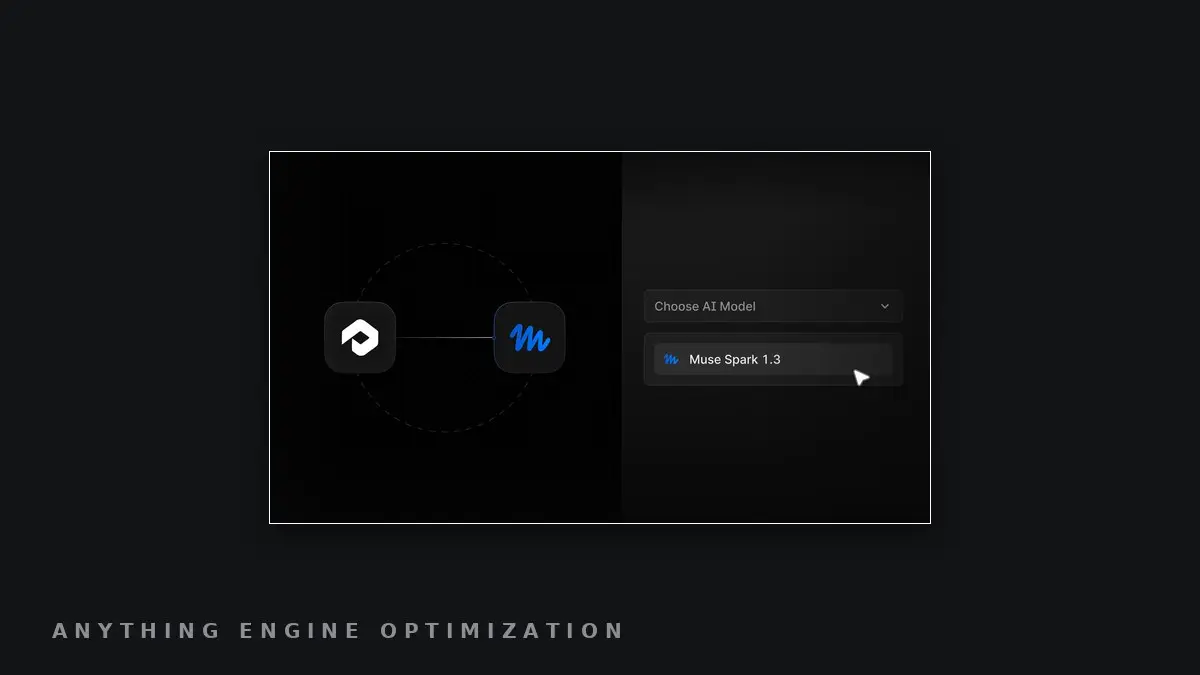
Profound adds Meta's Muse Spark to Answer Engine Insights tracking
What this answers
- Can Profound track Meta's Muse Spark?
- Yes. Profound said on Nov. 4 that Muse Spark 1.3 is now selectable in its Answer Engine Insights, so brands can see how the model describes them, which sources it cites, and how it compares with other tracked engines.
- Is tracking Muse Spark the same as tracking Meta's Muse agent?
- No, per Profound. Muse Spark is a model developers can call through Meta's API, while Muse is a separate personal agent that adds user memory and shopping workflows, so Profound says results show model visibility, not what Muse will recommend.
Profound said on Nov. 4 that Meta’s Muse Spark 1.3 model is now available in its Answer Engine Insights product, where brands can see how the model describes them, which web sources it cites, and how it compares with ChatGPT, Gemini and other tracked engines. Prompts can also be run with Personas, which add audience context such as role, industry and motivations.
Profound stresses that tracking Muse Spark is not the same as tracking Muse, Meta’s personal shopping agent. Muse Spark is a model developers can call through Meta’s API, while Muse adds a per-user shopping profile and memory, shopping workflows, and browsing of merchant sites and Meta’s product catalog. Per Profound, a prompt sent to Muse Spark carries no memory, so results show model visibility, not a guarantee that Muse will recommend a brand. Personas are described as the closest proxy it offers. The post does not say when tracking went live or what plans include it.
Why it matters: Measurement vendors are now tracking the model underneath an agent, not the agent, which leaves a gap between what a visibility dashboard shows and what a personalized shopper is actually told.
Glossary: Answer engine
Posted to the wire November 4, 2026. Edited by Joe Balewski.